

We move to the sound of jazz music with the Spanish artist Rosh, we dive into the pages of the latest novels read by the American Kristen Liu-Wong, we review some of the greatest cinema classics with the Swiss duo Nevercrew and catch up on Japanese anime with the Madrid-based illustrator and comic book artist J.R. Pinto. Don’t miss the December recommendations, you’ll find more than one good idea to give away…
Rosh333
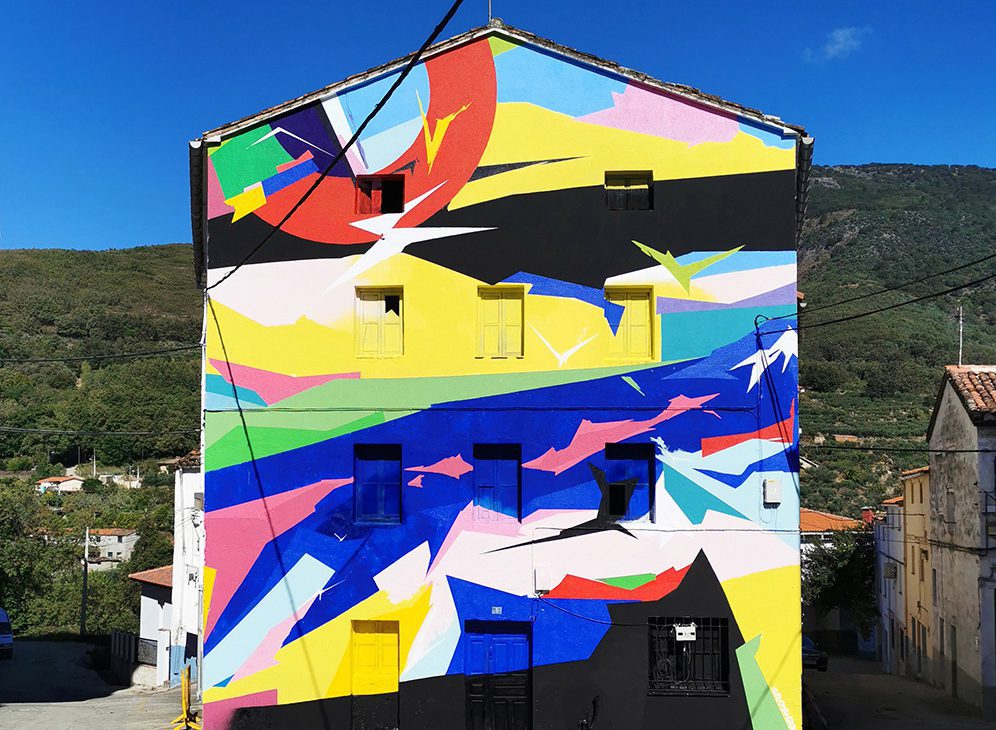
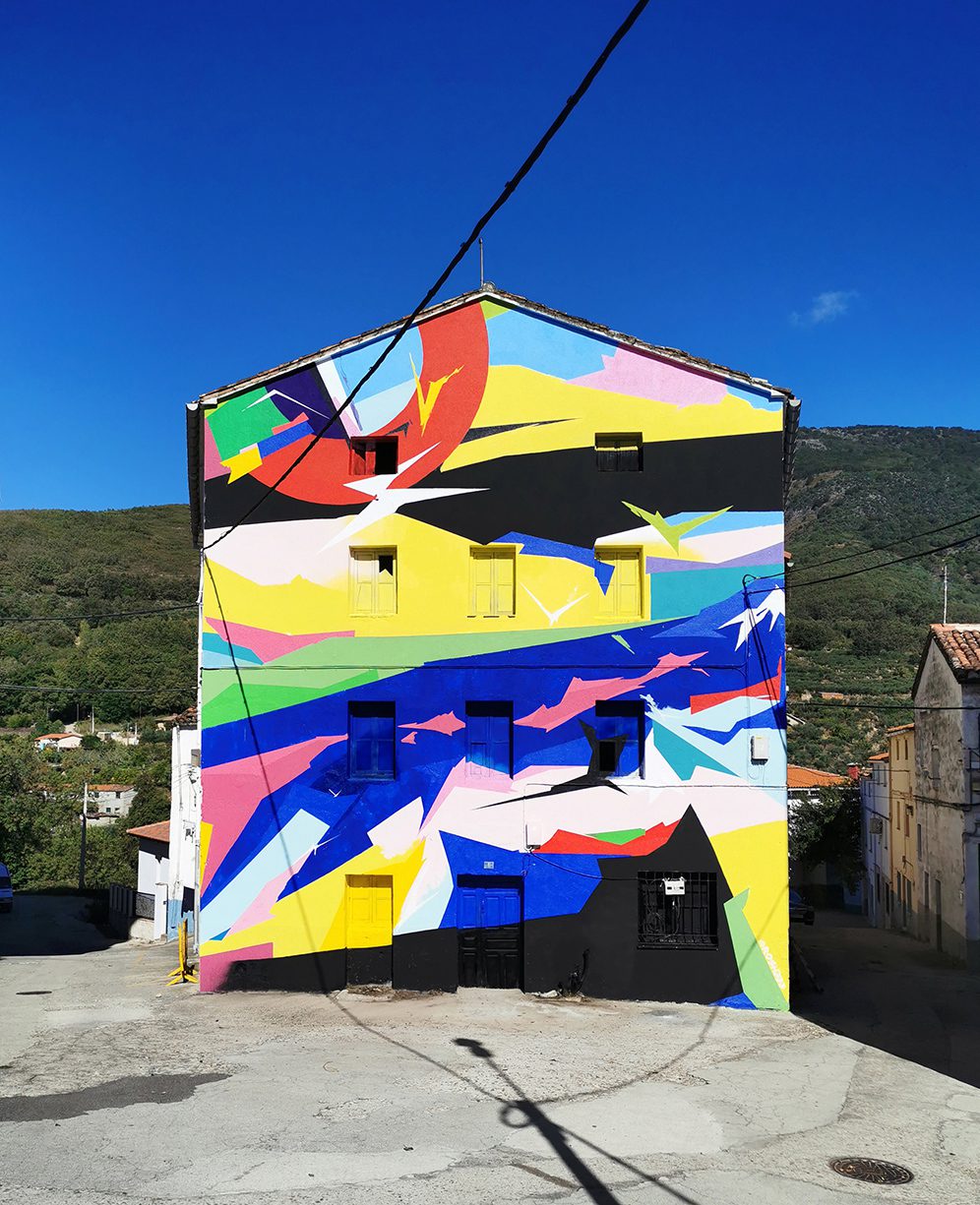
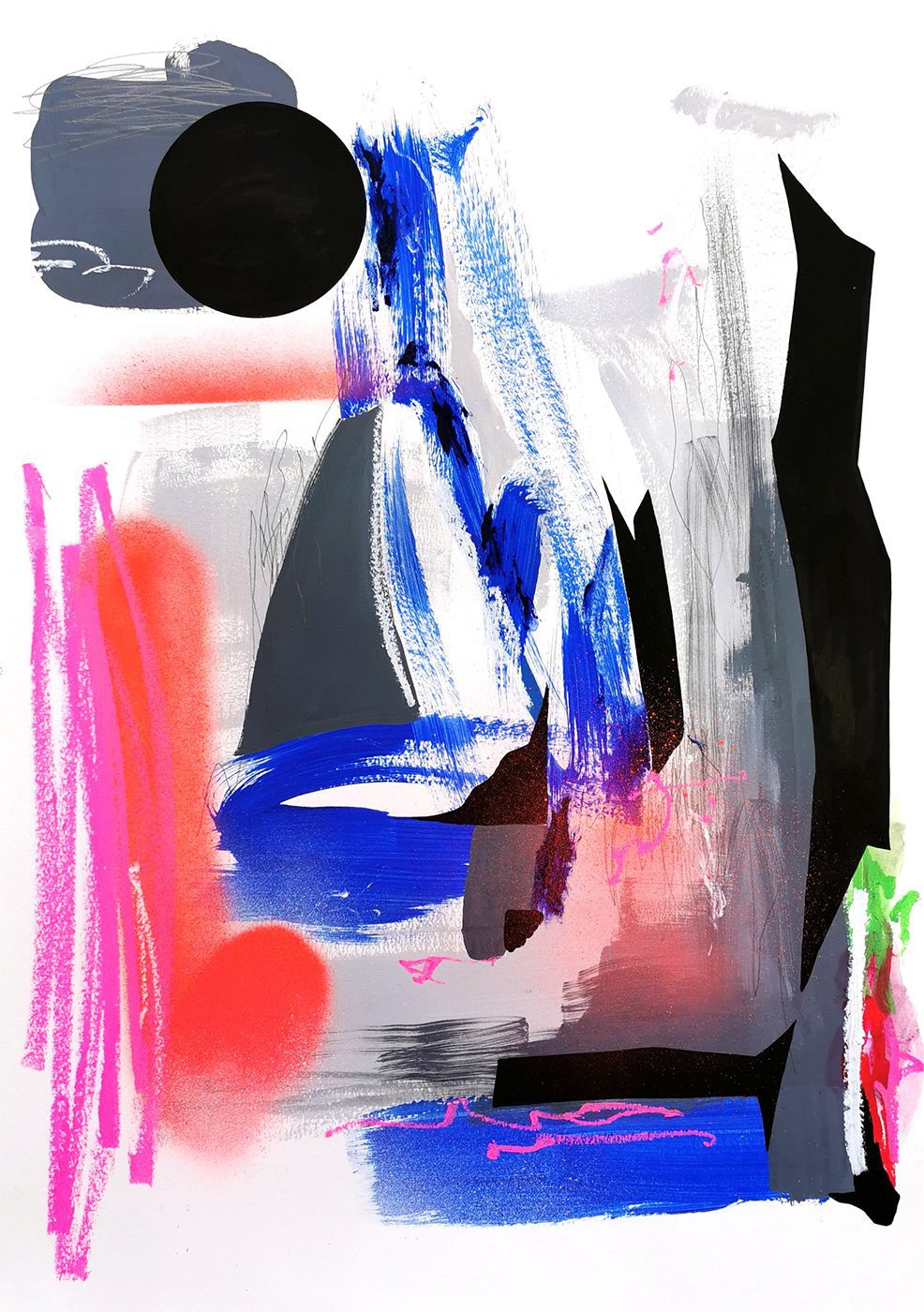
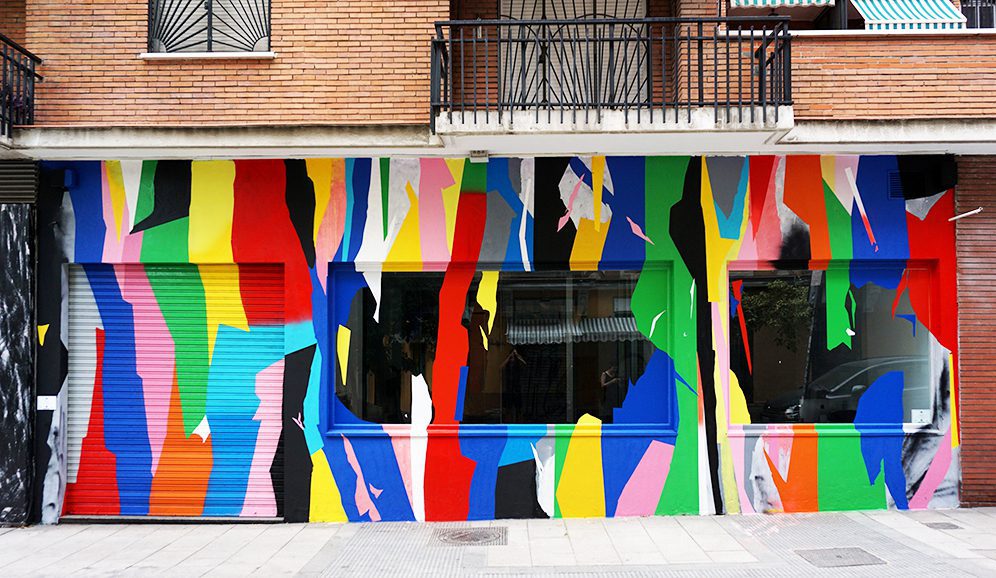
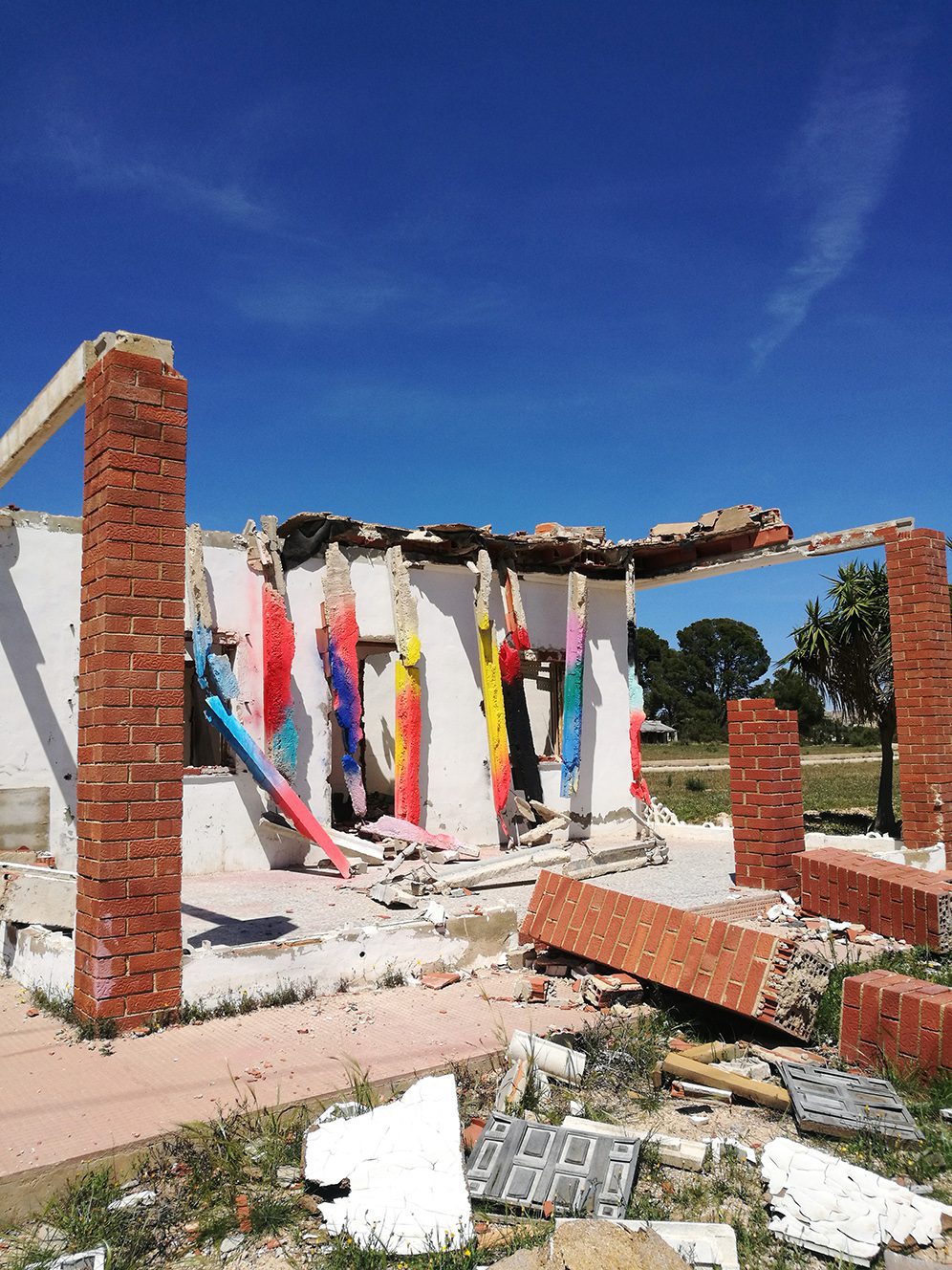
Color, form and movement are the main lines of Rosh333’s work (Alicante, 1977) and with which he experiments today from his studio in Madrid or in mural format. With roots that are strongly marked by the street and graffiti, and which he has never abandoned, Rosh comes from a Spanish generation of writers who in the late 90’s managed to become, due to their quality and innovation, one of the main focuses of attention on the international urban scene and today he has become one of the urban artists of national reference. Through his work, the artist from Alicante generates compositions that elude the very forms of nature and its organic development to establish a dialogue with the viewer. The latest? He has open an exhibition at Montana Gallery in Barcelona that will be on display until the end of January 2021 and he has brought out a limited edition of cotton handkerchiefs with his hand-printed designs. Don’t loose track of the upcoming!

«I liked very much the Spanish series «Antidisturbios» because of its realistic approach about a very current social problem in Spain. Also the fact that the protagonists are a group of riot police, of those we have seen so many times in Madrid city center and that the actors embroider it, it makes me believe the story. Also the director, Sorogoyen keeps the tension and the rhythm as in his previous film «El Reino».
I usually listen to «Carne Cruda» and «El Hilo» podcasts. It’s a way for me to access to the latest news from a different approach than in the regular news. They analyze current events in depth, they don’t just keep the headline, they talk about subjects that in other media go totally unnoticed and their content is generally quite social. I find it quite necessary in these times we are living in.
From time to time I review and listen to old Juan Carlos Cifuentes, «Cifu», programs, «Jazz entre amigos», «A todo jazz», etc… Cifu was an eminent figure for the jazz music dissemination and with him I have discovered an infinite number of artists. He is missed. I’ve also started listening to «Solo Jazz» on ivoox presented and directed by Luis Martín, along the same lines as Cifu’s program. In the last few years I like to listen to any of Brian Eno’s «Music for Airports» or Robert Fripp’s records that are in the same line. It is a type of music that accompanies, it is not necessary to listen to it at a very high volume and it is useful for me to work in the studio, to read or simply to have it in the background. When I need a little more action and I change the register of the soundtrack, especially in the initial stages of the pieces I work on, and I think this is later reflected.
The 2020 is being a year of good reading, it had to have something positive. I really liked an essay by Miguel Angel Hernandez entitled «The gift of the siesta». A very good reflection on that time that we can dedicate to ourselves that contravenes one of the fundamental principles of the modern world: productivity.
Some artists I have noticed lately and like are the Danes Richard Mortensen and Robert Jacobsen. The first one is has a delightful graphic work, shapes and colors very well harmonized. The second, his sculptures give the impression that they will start moving at any moment, his treatment of emptiness reminds me a little to Oteiza’s work but sharper in form and rhythm. I have also been reviewing the work of the Spanish “Team 57”, who already in the late 1950s were making flat colors move.
I don’t want to overlook the one who is being my biggest influence at all levels in these last months: John Zorn. I have only recently discovered him and I don’t know how he has escaped my radar. He is a composer and saxophonist of classical-contemporary music belonging to the New York Downtown scene of the late 70’s, which is still active today with hundreds of albums and collaborations behind him. His work ranges from free jazz, harmonic pieces for chamber orchestras, cartoon soundtracks, hardcore punk, noise, Hebrew music… Regardless of his musical repertoire, very visual, what strikes me very much is the conceptual character he gives to each of his projects, his way of mixing genres and transgressing the rules. It is very inspiring, I continue to process all the information and I think that somehow it will have an impact on my work».
Kristen Liu-Wong
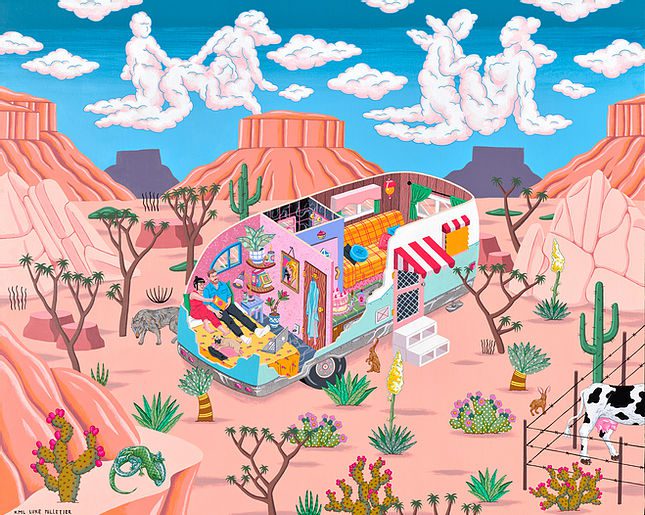
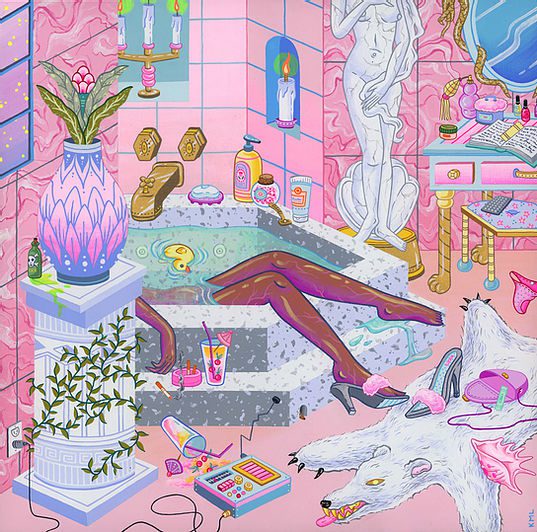
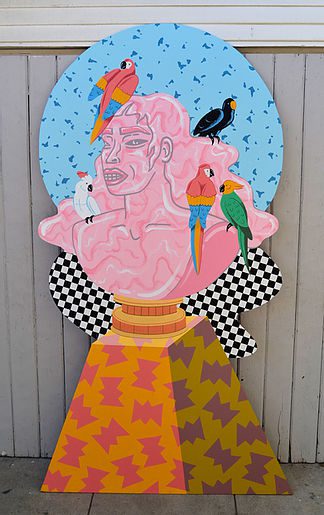
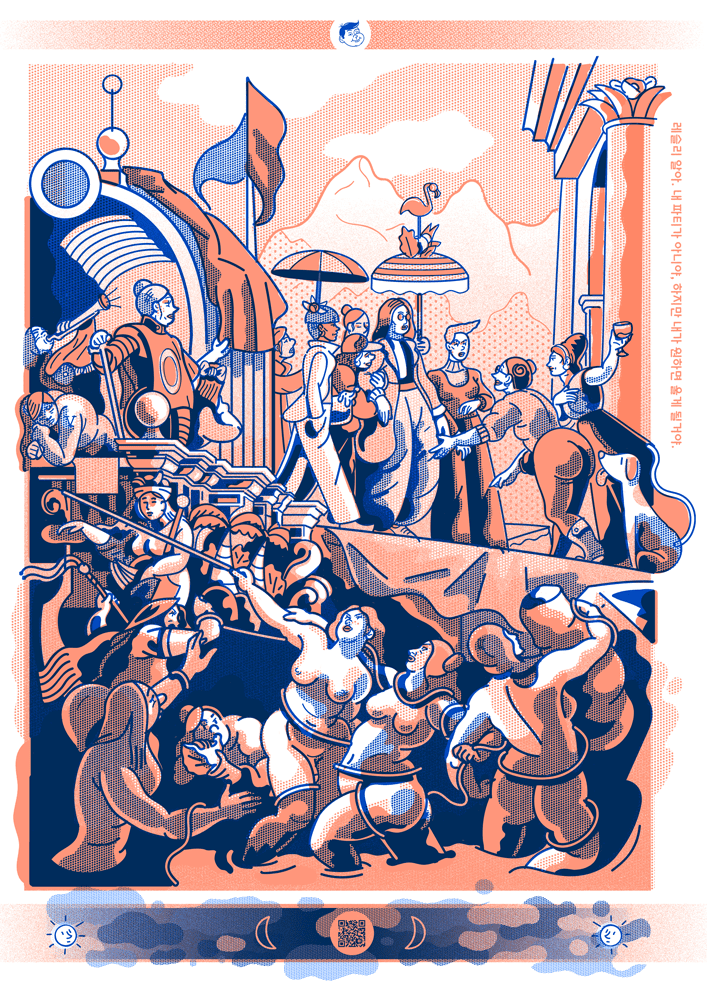
Kristen Liu-Wong’s work blends everyday occurrences from her own life with abstracted elements of fantasy worlds and crude humor. Born and raised in San Francisco and graduated in Illustration at Pratt Institute, Kristen tries to tell a story with every piece she makes, developing a personal and slightly sinister narrative within each painting. Using candy colors, heavy patterning, and tight compositions, the work draws inspiration from American folk art, the cartoons she watched as a kid, Shunga, erotic Japanese art, and her appreciation for architecture. She is always striving to make work that is highly personal but altered enough to allow individual interpretations to be applied to every story she paints.
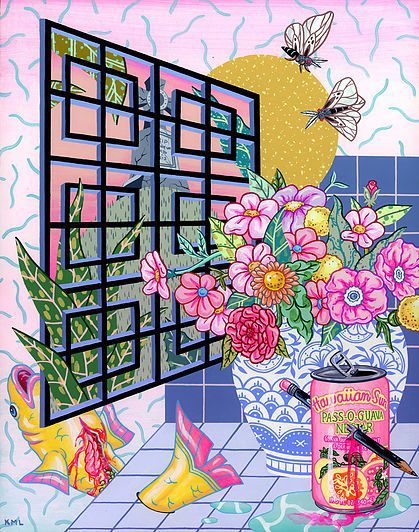

«Reading has been my primary escape during the Covid quarantine so I’ve been really indulging myself. I’ve been wanting to read more Japanese literature so I started by reading some Murakami novels. I especially enjoyed “The Wind up Bird Chronicle” and “Killing Commendatore”, which felt like a very timely read because the novel is about an artist who flees his failed marriage by escaping to the mountains and painting by himself. I also enjoyed reading the extremely claustrophobic (and existentially torturous) novel “The Woman in the Dunes” by Kobo Abe and “The Sound of the Mountain” by Yasunari Kawabata. It’s a poignant meditation on aging and coming to terms with one’s mortality, something that has of course been on my mind during a global pandemic.
As far as Western literature goes, Emile Zola is one of my favorite writers and I finally read “L’Assomoir” which is the story of Gervaise, a hardworking laundress and her successes and her subsequent hardships. The novel originally scandalized critics for its language, it’s gritty depiction of working class life, and the ravages of alcoholism on the working class, and Zola writes so vividly, you feel as if you’re there experiencing fin du siecle Paris! I also recently reread “The Master and Margarita” by Mikhail Bulgakov, which is one of my favorite novels. It tells the story of the Devil’s visit to a staunchly atheistic Soviet Russia and manages to weave together supernatural elements, dark satire, and a retelling of the story of Pontius Pilate.
In movies, I recently enjoyed the Korean horror film “The Wailing” (by Na Hong-jin). It perfectly blends both Eastern and Western elements of horror and also manages to have some funny moments, a hard feat for so truly terrifying a movie. Other movies I’ve watched lately that I’d suggest are “Kuroneko” and “Onibaba” directed by Kaneto Shindo. They’re both extremely visually inspiring, especially if you love Japanese horror films, and the opening scene of “Onibaba” is one of the most striking openings I’ve ever watched. And finally, if you need a little more Nic Cage in your life, I highly suggest the 1999 thriller “8mm”. Cage plays a private investigator who is hired to find out whether or not a snuff film is real and has to go into the gritty underworld of porn in LA- if that doesn’t sell you on it then Joaquin Phoenix as a cyber-punk type named “Max California” should!».
NEVERCREW
The Swiss duo Pablo Togni (Bellinzona, 1979) and Christian Rebecchi (Lugano, 1980) graduated from the Brera Academy of Fine Arts in Milan in 2005 and have been working together as an artistic collective since 1996. In 2012 they won the ‘Artist of the Year’ award by the Bally Foundation for Culture, were invited to be part of the international selection ‘Stroke Curated’ at the Munich urban art fair Stroke and in 2015 they entered the top 100 most influential artists of Graffiti Art Magazine. To date they have created murals in New Delhi, Los Angeles, Manchester, Grenoble, Vancouver, Madrid…. Their work focuses on the relationship between human beings and nature, but above all between human beings and the system in which we live: our actions on the environment, social injustices and human, natural and animal truth.
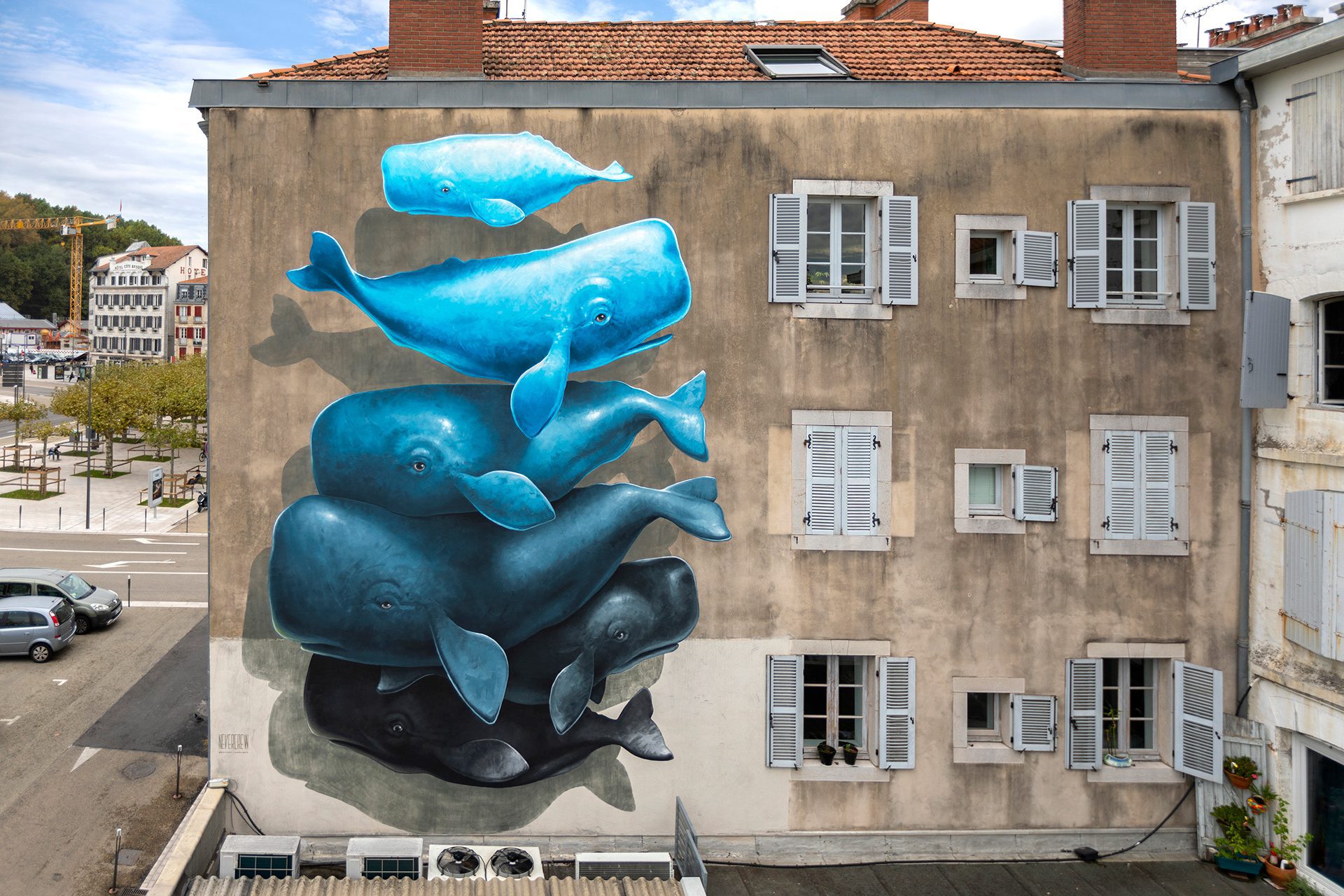
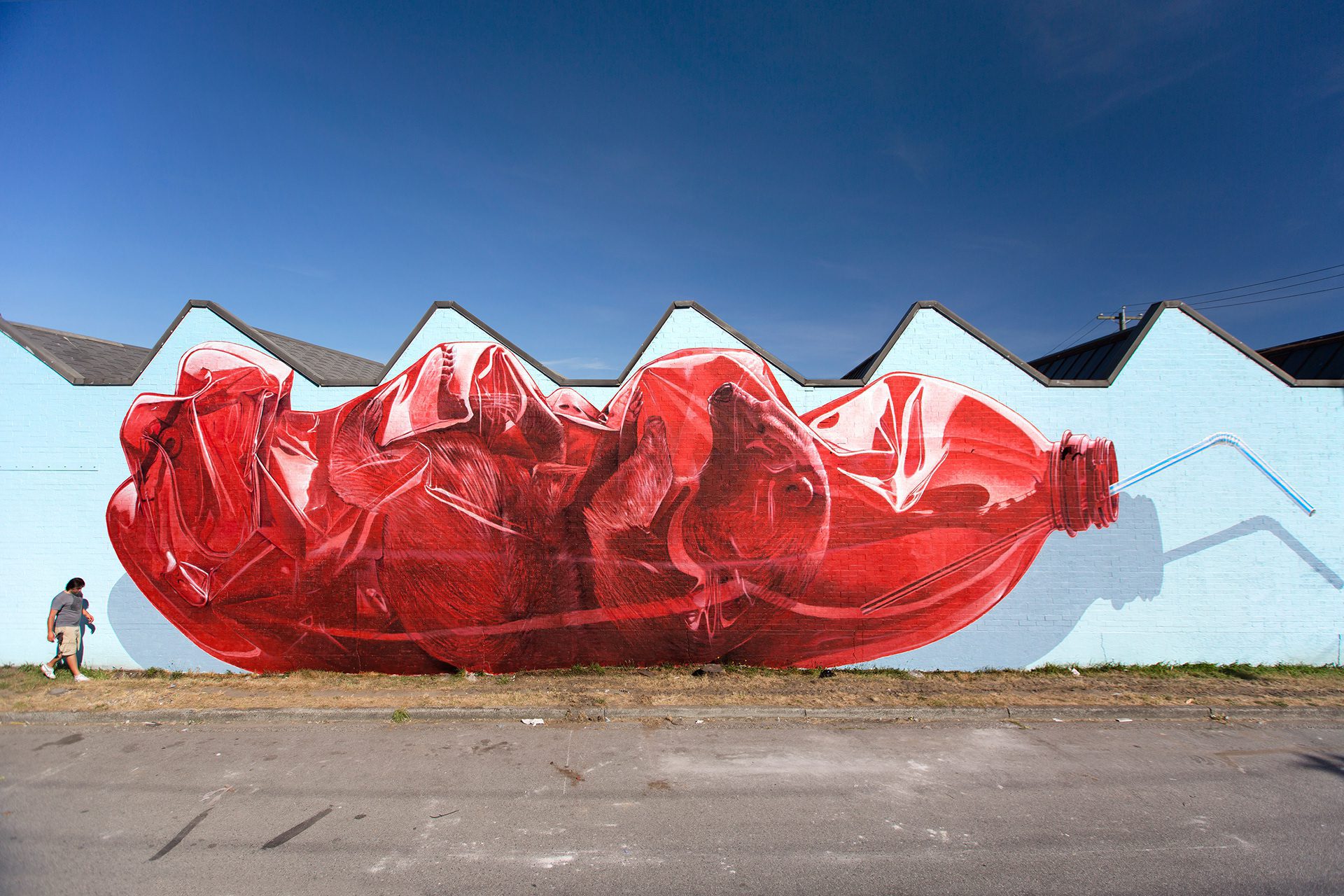
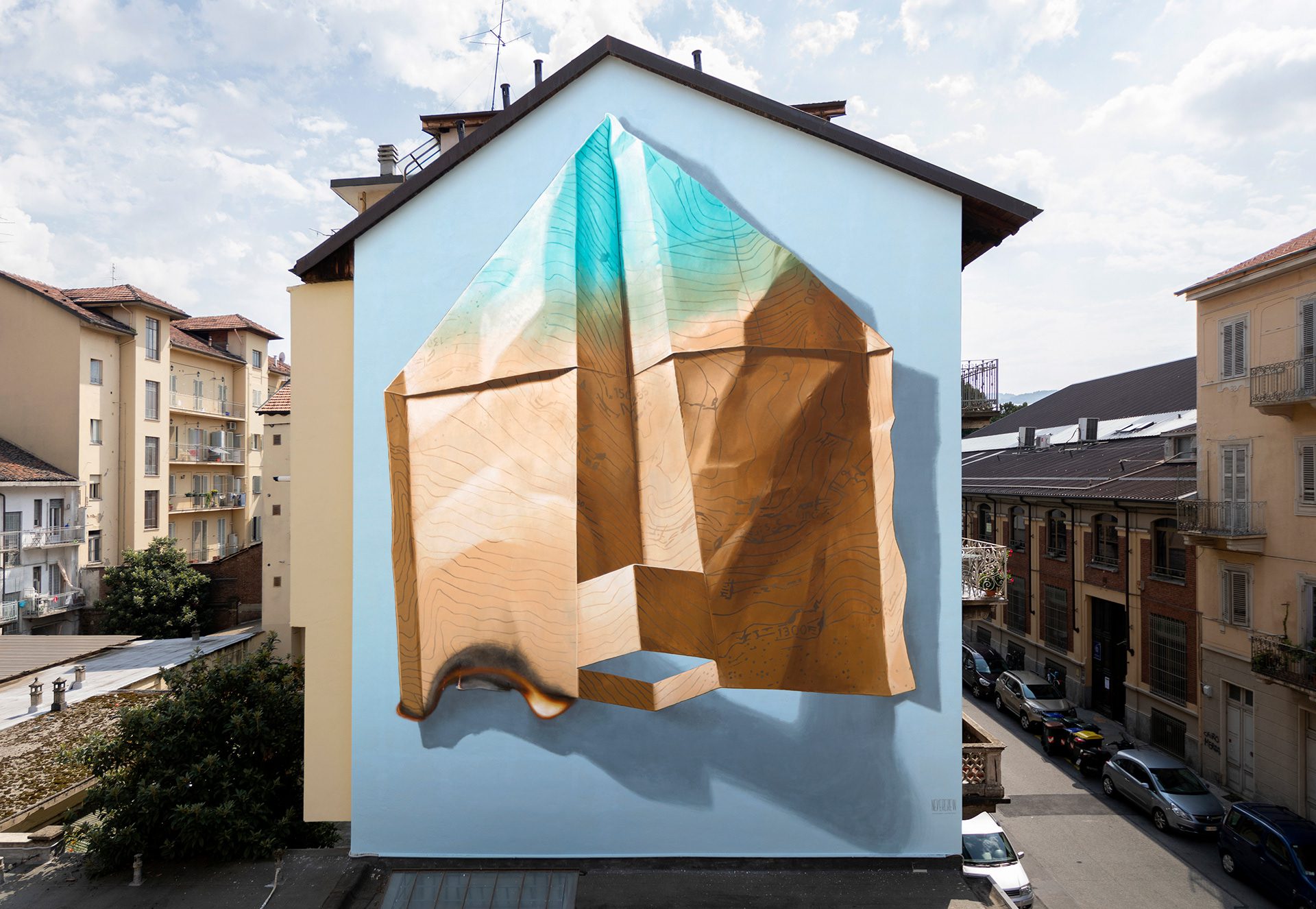
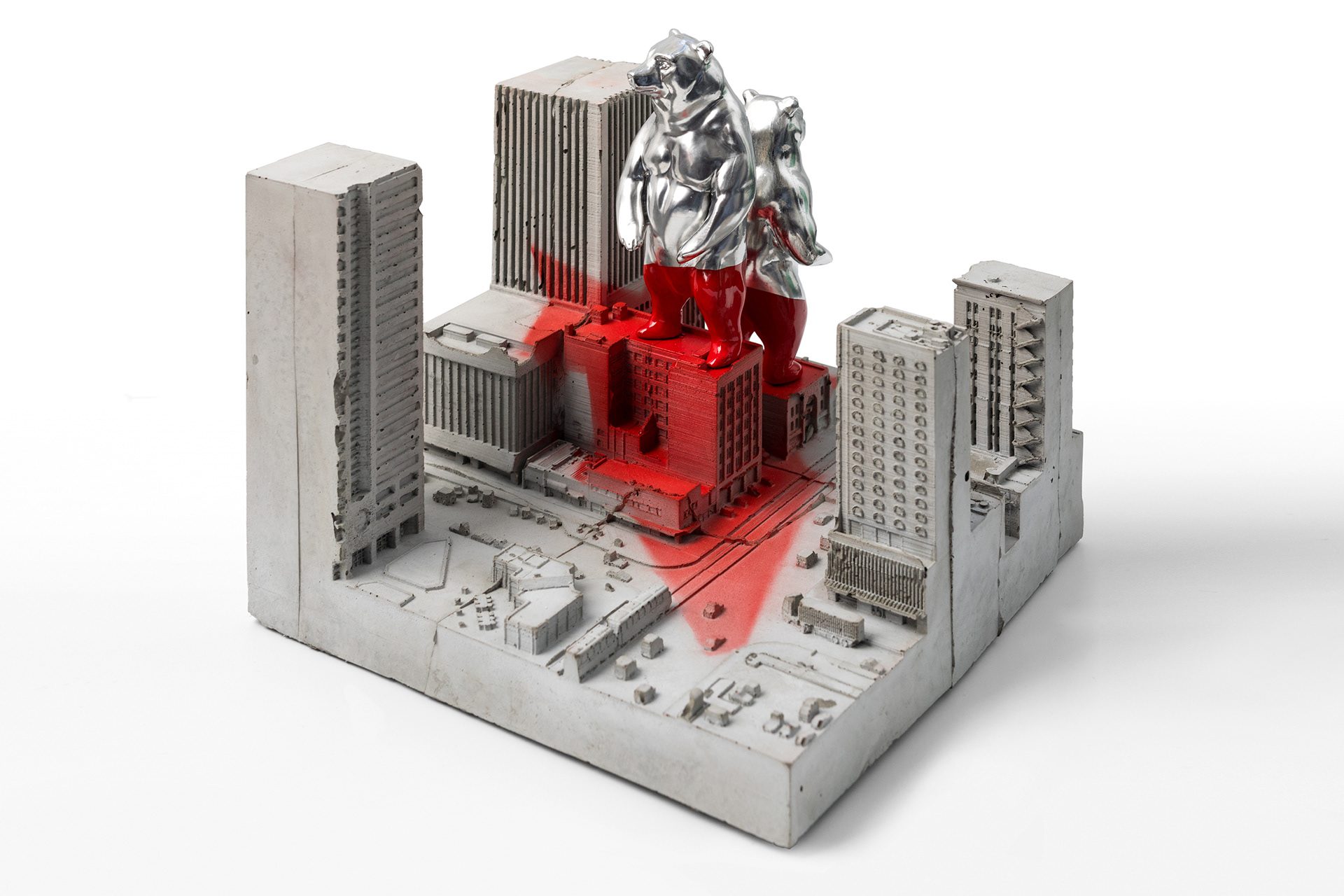
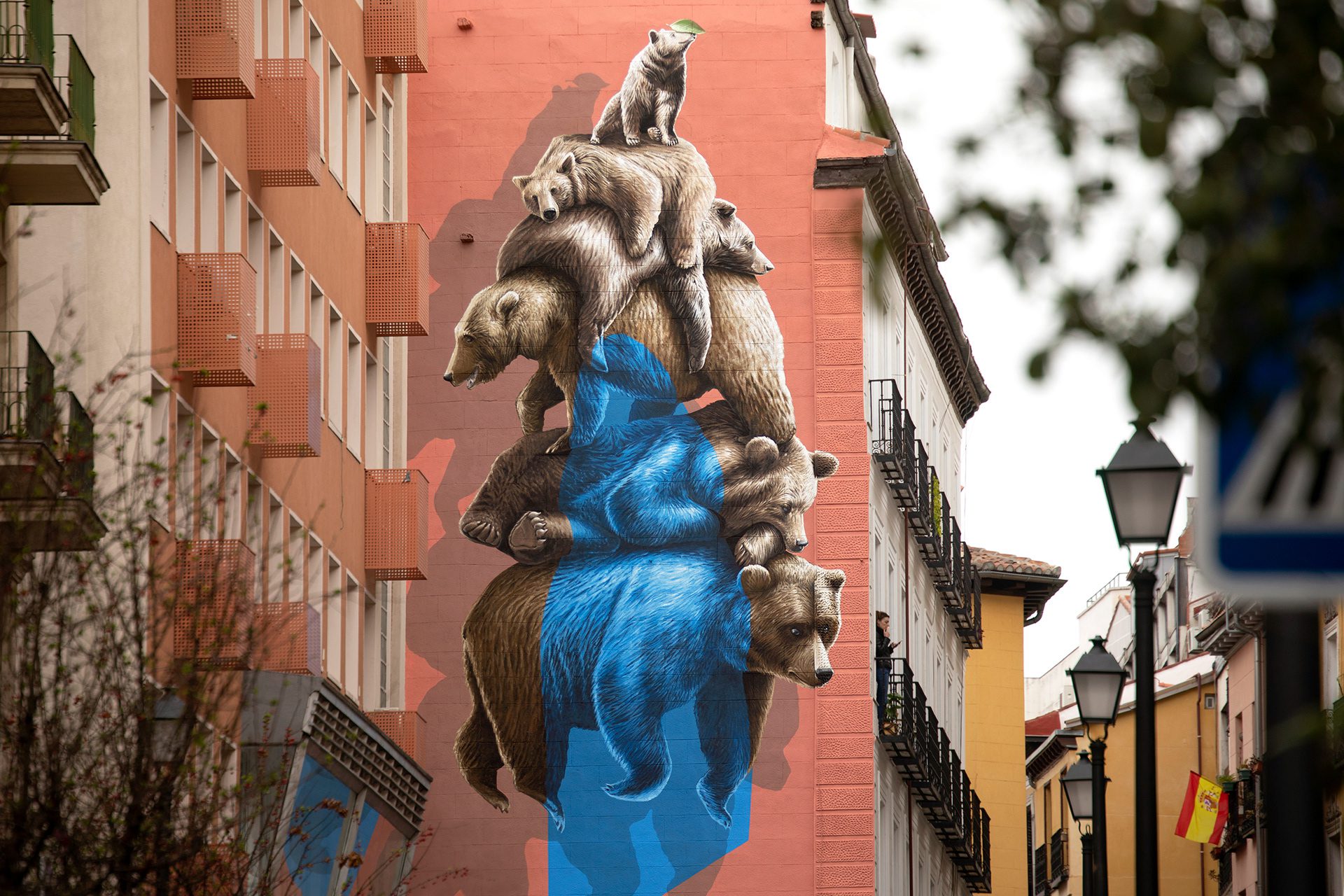
«We have many interests in common between us, but also many differences in what we like and in how and when we prefer to enjoy it. We’ve always been cinema lovers, so the list could be extremely wide! Just to name a few, we could say that we like classics like “Twelve Angry Mens” by Sidney Lumet, 1957, where all the story evolves only in the dialogues and in one location, a more recent one following this structure is “Locke” by Steven Knight, 2013. Other classic is we like is “Once Upon a Time in the West” by Sergio Leone, 1968, which gives an impressive portrait of a specific situation and the people who’s facing the change. In the “western” style we also loved “Pat Garrett and Billy the Kid” by Sam Peckinpah, 1973, with the stupendous soundtrack by Bob Dylan. We love directors such as David Lynch, Michel Gondry, Wes Anderson, Spike Jonze for their strong imaginary and their peculiar styles and strong stories, thinking about “Being John Malkovich” by Spike Jonze, 1999, we can say that we like also the scripts by Charlie Kaufman’s, who wrote it, and its movies like the insane “Synecdoche, New York”. Just to mention a few actual movies we appreciated recently we could name “Perfect Day” by Fernando Leon de Aranoa (2015), “The Witch” by Robert Eggers (2015), “Uncut Gems” by Josh and Benny Safdie (2019) and now we’re waiting for the new “Dune” by Denis Villeneuve.
Talking about science fiction and “Dune”, one of the authors we loved is Frank Herbert with it’s “Dune” series. There’s Frederik Pohl with “Gateway” (1977) that’s an amazing and deep adventure. Other sci-fi authors we appreciate are Aldous Huxley, Isaac Asimov, especially with its “Foundation” series, Jack Williamson and its “Legion of space” series, Douglas Adams «The Hitchhiker’s Guide to the Galaxy”, 1979… We love classic literature, or authors like Franz Kafka, Jack Kerouac, Henry David Thoreau.
About the topics of our artistic influences, we found very interesting “Leviathan or, The Whale” by Philip Hoare (2008), that deepen the relationship between humans and whales following the ideal path of Melville’s “Moby Dick”, or “Joseph Beuys – Il Cappello di Feltro” by Lucrezia De Domizio Durini (1998), that describes life, thoughts and “meanings» of an artist that we admire for its vision of art, his relationship with nature, his idea of concrete utopia and social sculpture. We were recently reading Alejandro Jodorowsky, we like the strong mix of life, art, magic, traditions, instincts, anthropology and psychology as a complex way to find or recover simple natural truths or viceversa
Music is hard to resume, especially for two different tastes but we want for sure to mention Fabrizio De André, that used to have an incredible musical elegance, but especially the ability to narrate other people lives and a strong sensitivity in understanding and portraying minorities and persons on the fringes of society».
JR PINTO
You only have to look at his work to realize that he is a comic enthusiast and a ping pong fanatic. J.R Pinto (Madrid) has a degree in Fine Arts from the Universidad Complutense and after his scholarship at the Casa de la Moneda in Madrid, where he won the Young Creators 2016 award from the Fundación Pilar i Joan Miró and the Real Academia de San Fernando, he was introduced to the world of calligraphy which later helped him in the development of his work. He lived in Vancouver where he worked as a cartoonist for a local newspaper and back in Madrid he has collaborated with different media such as Yorokobu. With the short story ‘Working Holidays’ about an immigrant living in Canada, he won the graphic novel prize Accesit and is now part of the comic ‘En Corto’ published by Astiberri. Today he has several self-published publications that have been presented at fairs such as Libros Mutantes and combines it with design works for advertisement agencies and museographic design.
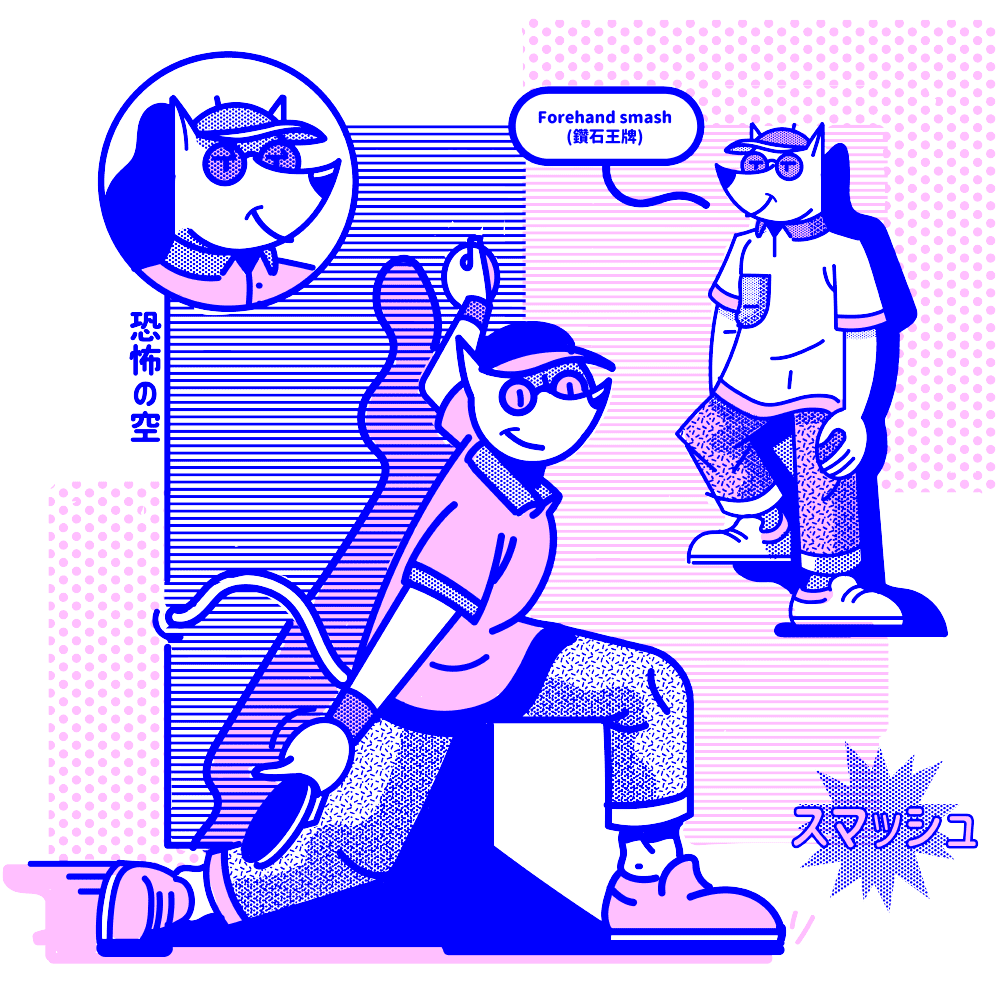
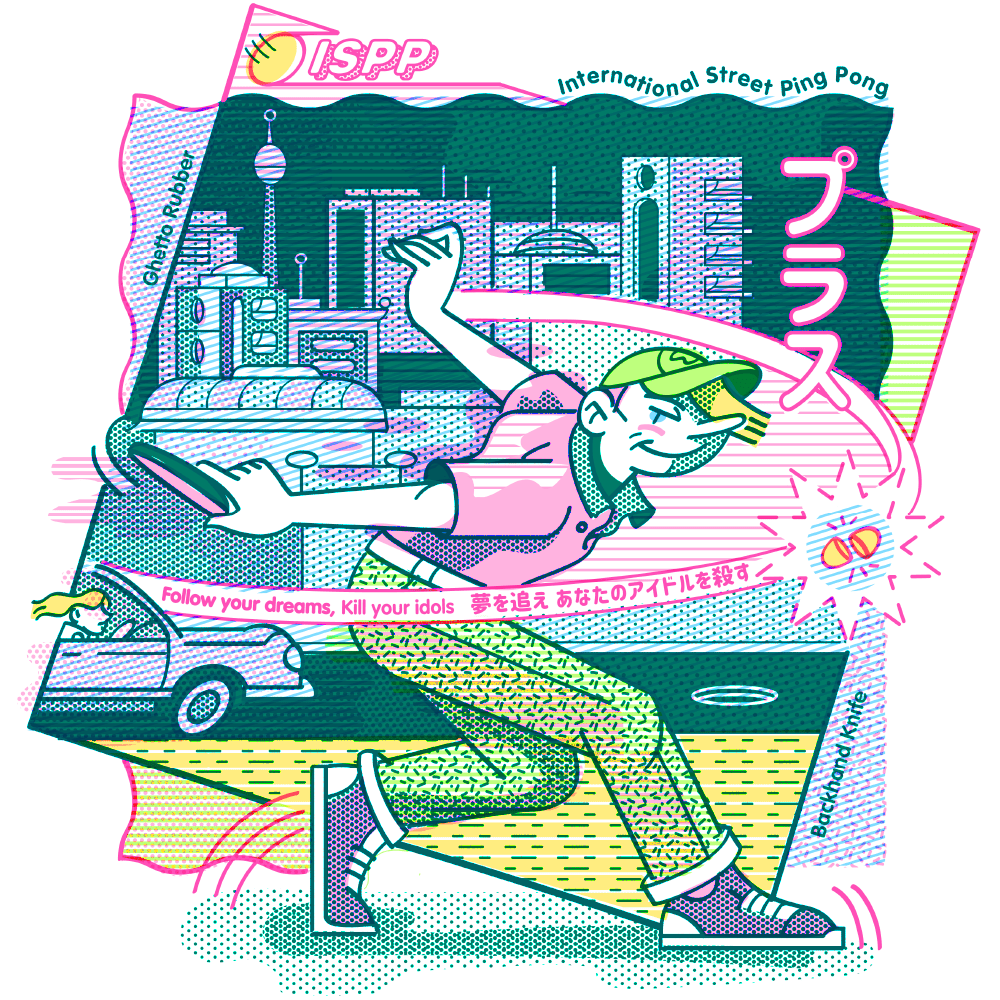

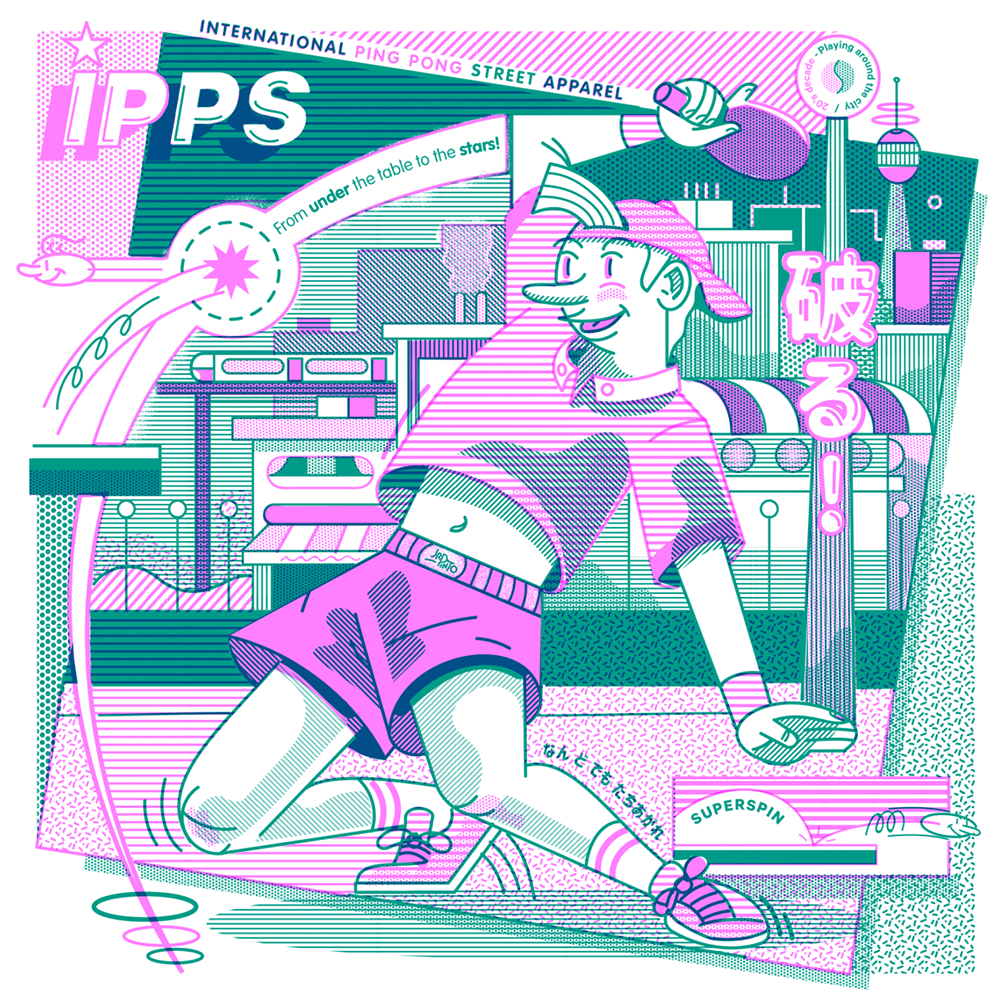
«I can’t think of a better way to start a few recommendations than by inviting everyone to see the incredible work of Masaaki Yuasa, without a doubt the best animation director of the moment (I would say almost of film-series in general, but I don’t want to provoke the standard hipster too much). Series such as “Devilman Crybaby”, “The Tatami Galaxy” or “Kemonozume” are very entertaining shows because of the wild, deep and original visual spectacle they offer, always masterfully orchestrated by Kensuke Ushio. However, his work that has captivated me the most so far is “Ping Pong the Animation”: a series of 13 chapters animated in an unimaginable way, a perfect production in every sense, besides being the adaptation of one of the most singular cartoonist of the last times in Japan: Taiyo Matsumoto, ‘mangaka’ (manga artist) of Tekkonkinkret or Blue Spring.
On a musical level I will recommend one of the best playlists of all times: “Pictures at an exhibition” by Modest Musorgski, later orchestrated by Maurice Ravel. And two of the versions of this work that I liked the most: “Pictures at an Exhibition” by Emerson, Lake and Palmer, 1971. Progressive rock at its peak, with special attention to The Great Gates of Kiev and the eclectic-electric space version of Isao Tomita, one of the fathers of electronic music.
As for books, I am going to recommend a classic of Hispanic American literature: «2666» by Roberto Bolaño. I remember that when I read it, it completely changed my perception of what a thrilling narrative was. A more recent one: «Coños como el de Marta» by Diana Aller, a raw and very funny lesbian story. An author I like very much is Manuel Chaves Nogales, from whom I recently read «A Sangre y Fuego». He was a Spanish journalist and reporter with an exquisite pen and a privileged way of thinking who was hated by both Nationals and Republicans alike. His reports and narratives of the Interwar period and the Spanish Civil War show that civil society does not admit to Manichean polarizations of good or bad, or red and blue».